← Back to RUBYST Goji nutrition story

A complete visual guide

See the whole goji story.

Each original illustration is shown in full with a clear explanation beside it.

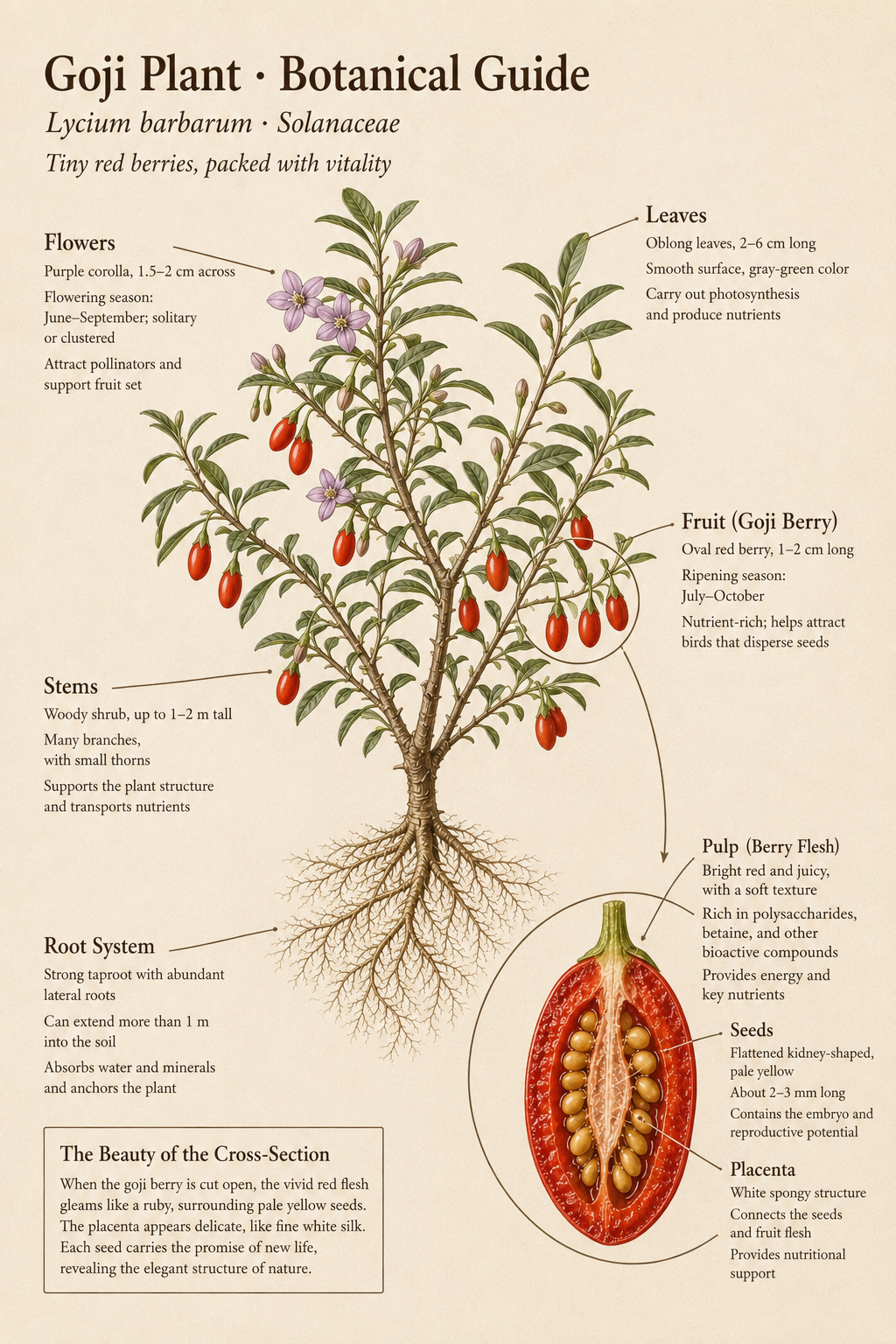
Botanical guide to the goji plant, roots, stems, flowers, leaves, fruit, pulp and seeds
01 · The whole plant

From roots to ripe fruit.

The goji story starts below the soil. Roots anchor the shrub and take in water and minerals; woody stems hold its branches; leaves collect sunlight; purple flowers appear before the red fruit forms.

  • Roots and stems support growth
  • Flowers lead to fresh fruit
  • Skin, pulp and seeds complete the berry
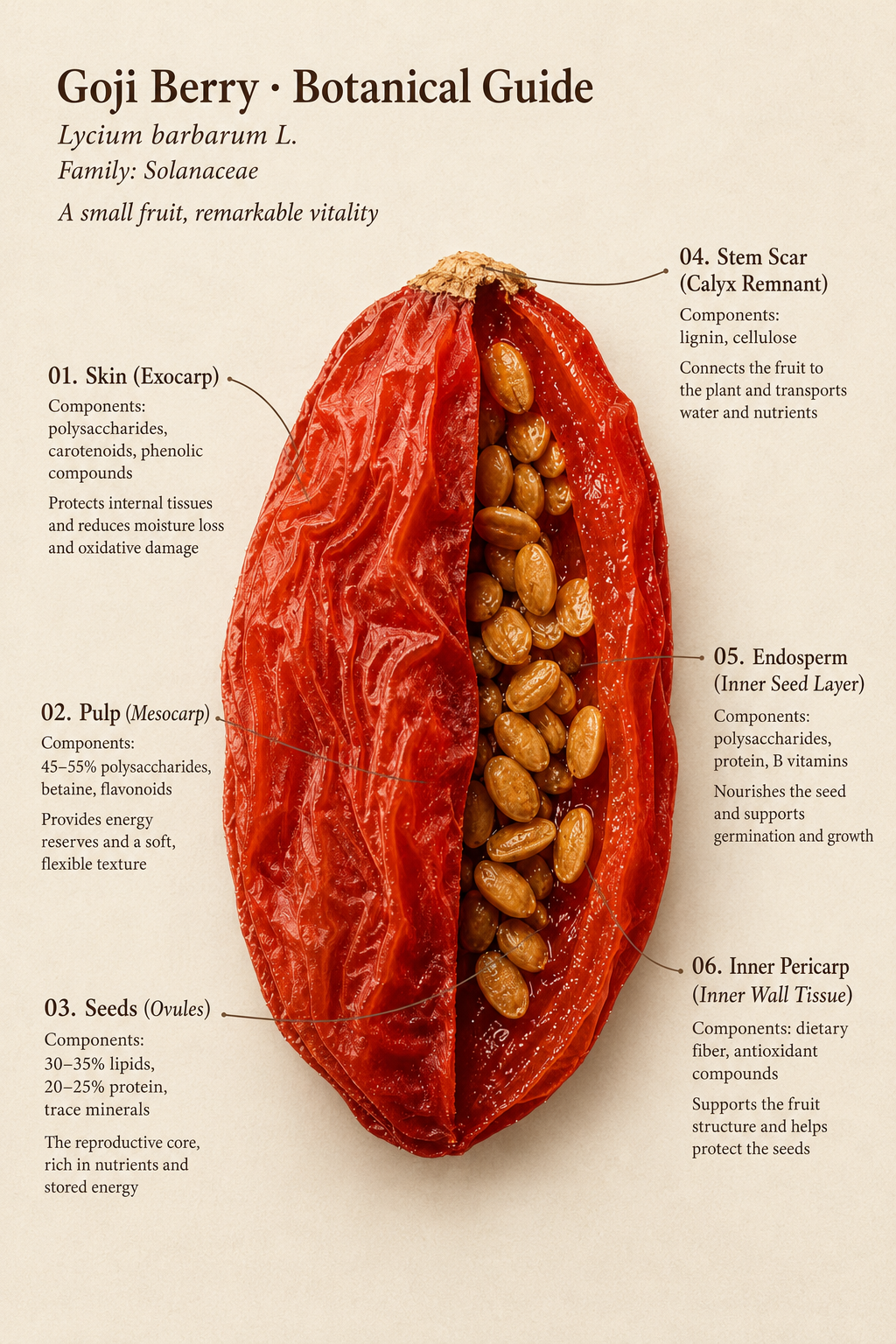
Close-up guide to the skin, pulp, seeds and inner layers of a dried goji berry
02 · Inside the berry

Every layer has a role.

The outer skin helps protect the berry and retain moisture. Beneath it, the edible pulp holds the fruit's texture, color and characteristic plant compounds, while the inner wall surrounds the seeds.

  • Protective outer skin
  • Soft, edible fruit pulp
  • Seeds at the reproductive core
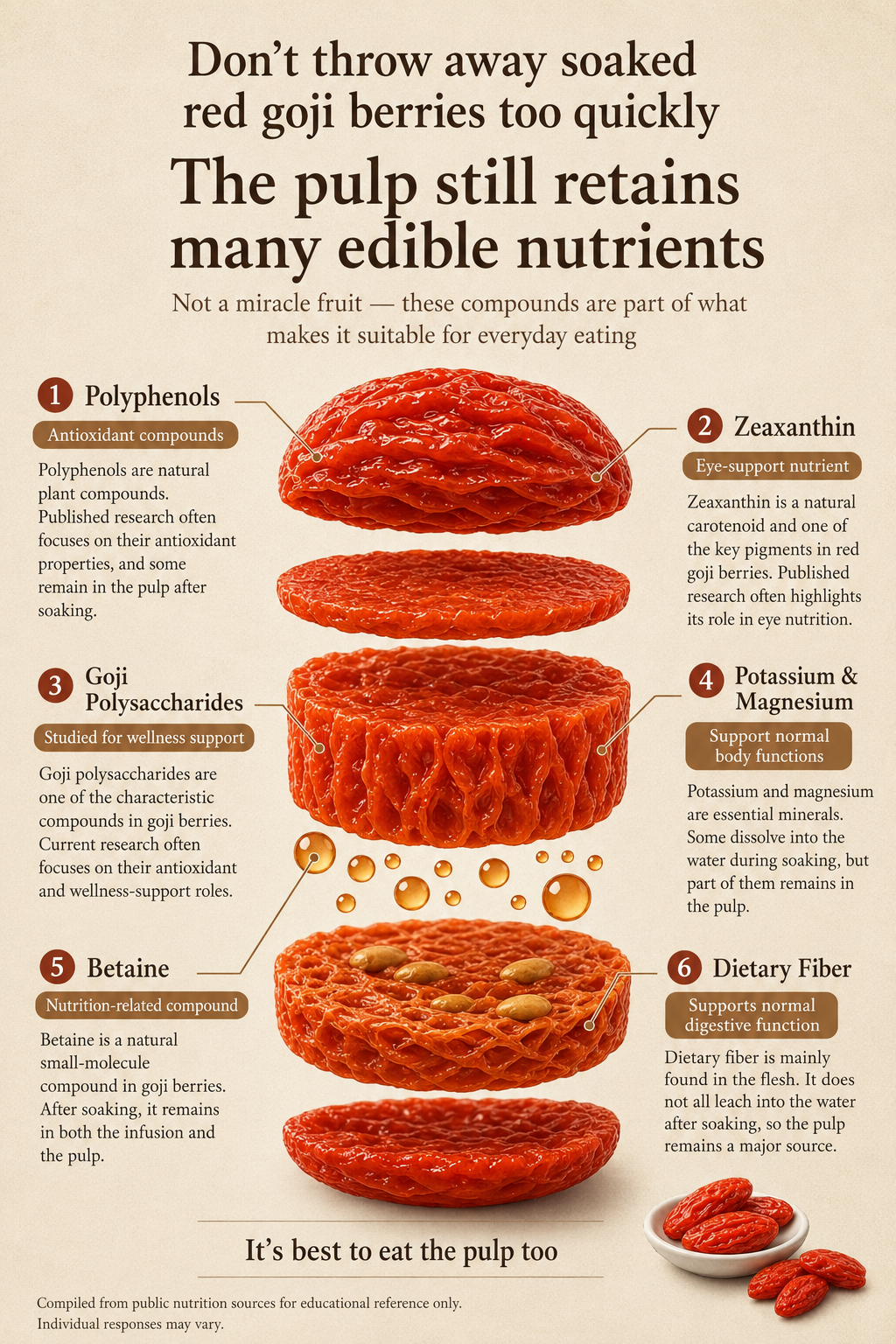
Illustrated guide to edible compounds retained in soaked goji berry pulp
03 · The edible pulp

Keep the softened fruit.

After steeping, the liquid carries some soluble components, but the softened berry still contains edible flesh and fiber. Enjoying the fruit as well as the infusion keeps the whole-fruit ritual simple.

  • Naturally occurring polyphenols
  • Goji pigments such as zeaxanthin
  • Fiber remains mainly in the flesh
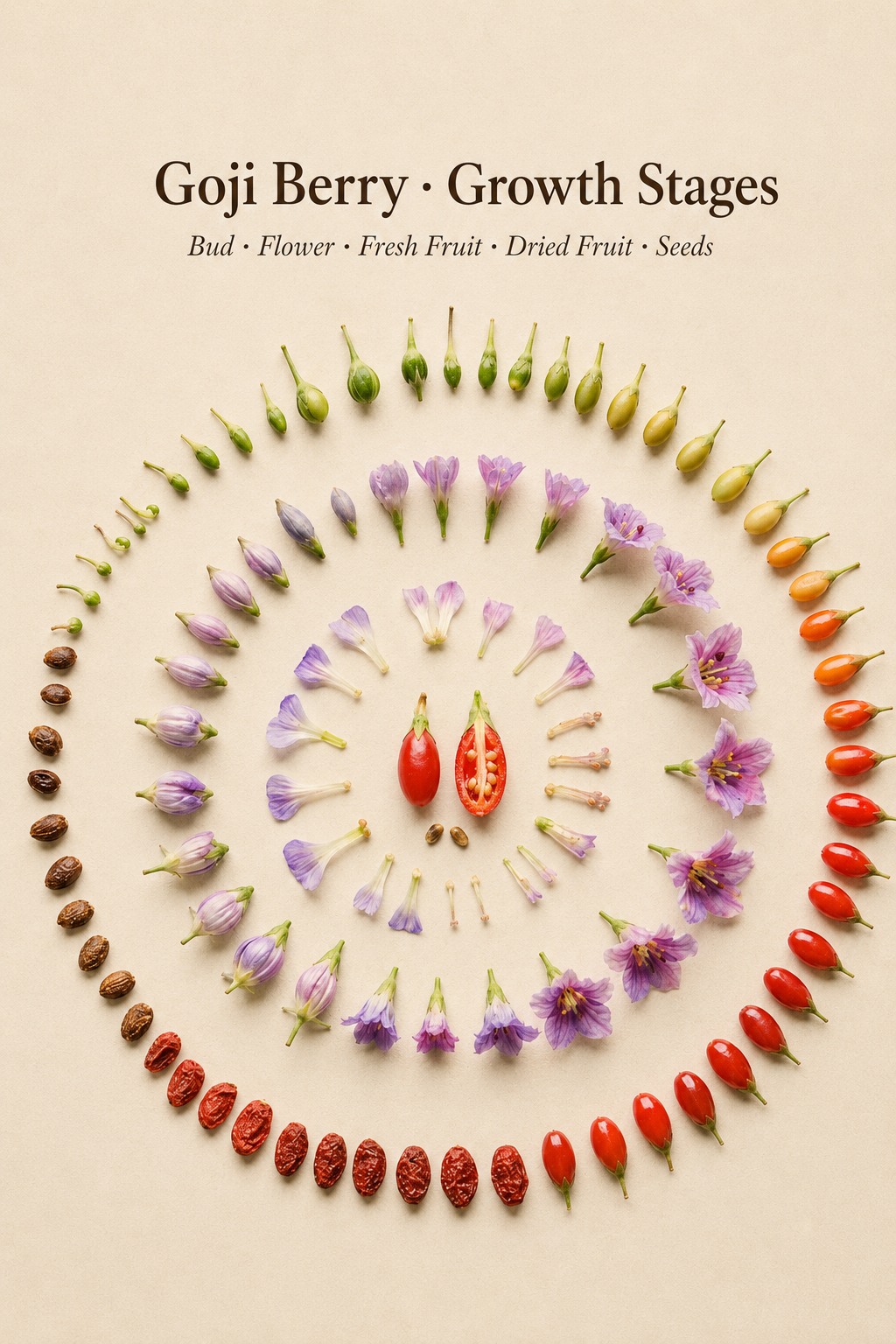
Visual summary of goji growth from bud and flower to fresh fruit, dried fruit and seeds
04 · The complete cycle

Bud, flower, fruit, dried berry, seed.

Every form of goji belongs to one connected growth cycle. This final illustration brings the stages together so the source of the fruit and its transformation are easy to understand at a glance.

  • One plant, many visible stages
  • Fresh and dried fruit are connected
  • The seed begins the cycle again

植物生命周期 · 栽培与品质观察

从根系到干果:枸杞的一季如何形成

枸杞的果实品质并非只在采收时决定。它来自多年生植株的营养积累、当季的物候推进,以及水分、温度、光照、土壤与采后管理在各阶段的共同作用。

植物学身份与观察边界

食用枸杞通常指茄科(Solanaceae)枸杞属(Lycium)植物的果实;在中国商业与栽培语境中,宁夏枸杞(Lycium barbarum L.)是常见种之一。它为落叶灌木,枝条具节、叶多单生或簇生,花多为紫色至淡紫色,成熟浆果呈橙红至红色。品种、砧木或繁殖材料、树龄、栽培区域与管理制度均会改变植株表现,因此应将以下内容理解为通用的植物生产知识,而非对所有产区或批次的固定描述。

01

根系:吸收、锚定与储备

根系将植株固定于土壤,同时吸收水分和矿质元素,并参与碳水化合物等同化产物的储存与再分配。春季萌芽、花芽形成及果实膨大都依赖前期根系活力与根际环境。土壤通气不良、长期渍水、盐分胁迫或根区过度干旱,都会限制根的呼吸与吸收,使地上部生长和坐果承压。成熟园的灌排、覆盖、有机质管理与合理施肥,目标是维持根区稳定而不是单纯追求短期旺长。

02

枝干与芽:冠层的运输网络

木质化枝干提供机械支撑,并通过木质部与韧皮部承担水分、矿质元素和光合产物的运输。芽包含未来枝、叶、花或混合器官的发育潜力;修剪会改变光照分布、通风条件和营养分配。过密冠层易造成内膛光照不足与湿度偏高,过重修剪又可能诱发徒长。生产上需要在结果枝更新、冠层透光与稳定产量之间取得平衡。

03

花芽分化:由营养生长转向生殖准备

花芽分化是芽内分生组织由形成枝叶的趋势转入形成花器官的过程。光周期、温度、枝条成熟度、树体碳氮平衡和水分状态都可能参与调节。氮素过量或持续旺长可能使营养生长占优势;反之,严重胁迫也会削弱芽体发育。实际判断应结合当地物候、品种与树势,而不宜仅以某一次施肥或单一日期推断花量。

04

开花与授粉:结实的起点

花开放后,花粉活力、柱头可授性与适宜环境共同影响受精机会。温度过高或过低、连续降雨、强风、干热以及授粉昆虫活动受限,都可能使有效授粉窗口缩短。保持园地生境多样性、避免在开花高峰期进行可能干扰传粉者的作业,并根据当地规范使用投入品,有助于降低这一阶段的不确定性。

05

坐果与膨大:细胞数量和体积共同塑形

受精后形成幼果,早期落果与资源竞争较为敏感。随后果实经历细胞分裂、细胞膨大和组织分化,果皮、果肉与种子同步建立。稳定但不过量的供水有利于维持膨压与运输;水分大起大落则可能影响果径均匀性与果皮完整性。此时叶片是重要的“源”,果实是重要的“库”,保留功能叶、控制病虫损伤和维持合理结果负载,都是品质管理的一部分。

06

转色与成熟:颜色、风味与可采性的协同

随着成熟推进,果实颜色由绿色逐渐转向橙红或红色,叶绿素降解与类胡萝卜素等色素的相对显现或积累共同参与外观变化;可溶性糖、有机酸、香气前体与组织质地也在改变。综合色泽、果实饱满度、硬度、可溶性固形物、种子成熟度及用途要求,比只看“红不红”更可靠。成熟过度会提高机械损伤和采后腐败风险,未熟采收则可能造成色泽与风味发展不足。

07

采收:以轻拿、分级与时效保存原料状态

鲜果表皮薄、含水量高,采摘与转运中的挤压、摩擦和高温闷置都会增加损耗。宜在果面干燥、成熟度相近时分批采收,减少混入病果、破损果和过熟果;容器应清洁、浅放并避免暴晒。批次化记录采收日期、地块、成熟度和初选情况,可为后续分级、干制参数与质量追溯提供依据。

08

干制与储存:控制水分,而非简单“晒干”

干制的核心是以适当温度、风速和时间降低水分活度,抑制微生物生长和酶促变化,同时尽量减少色泽、香气与热敏成分的损失。日晒、热风或其他工艺各有适用条件;温度过高可能带来褐变与质构改变,干燥不足则提高返潮和霉变风险。成品应在避光、干燥、低氧或密封条件下保存,并注意包装阻隔性、仓储温湿度、虫害控制及批次检测。对于销售产品,还应遵循适用的食品安全、标签和农残/污染物法规与标准。

Research notes

研究依据与延伸阅读

以下论文用于支撑花期、成熟、品质形成与干制部分的科学背景。研究对象、品种和环境不同,结论应结合具体产区与批次理解。
  1. Changes in sugars and organic acids in wolfberry fruit during development and maturationFood Chemistry, 2015 · 追踪果实发育期糖、有机酸及枸杞多糖的动态变化,说明“成熟”是连续的生化过程,而非单一颜色节点。
  2. Flowering Biology of Lycium barbarum L. NQ-2Bulletin of Botanical Research, 2011 · 记录单花开放时长、花粉活力与柱头可授性随花期变化,为授粉窗口的判断提供案例依据。
  3. Integrated metabolome and transcriptome analysis of ripe fruits harvested at different periods2024 · 比较不同采收时期成熟果的代谢和表达差异,提示采期会影响糖、维生素 C、类胡萝卜素及整体品质表型。
  4. Carotenoid biosynthesis and color formation during goji fruit ripening2023 · 从转录组与代谢组角度解释成熟转色过程,支持“不应只凭表面红度判断成熟与品质”的原则。
  5. Phenological traits of goji berry under field conditions2021 · 提供萌芽、开花、果实发育和成熟等物候记录;具体天数会受品种、年份与环境影响。
  6. Effects of traditional and emerging drying techniques on microstructure and quality of Lycium barbarumLWT, 2025 · 比较不同干制路径对微观结构及品质指标的影响,说明干燥温度、传质速度与终点控制同等重要。

The complete picture

Whole fruit. Whole story.

The plant, fruit, pulp and seeds are different chapters of the same goji. Use this visual guide as an educational reference and check product labels for the details that matter to you.
Return to RUBYST products